



Source: vnexpress.net
First Session of the 16th National Assembly Expected to Open on April 6, 2026
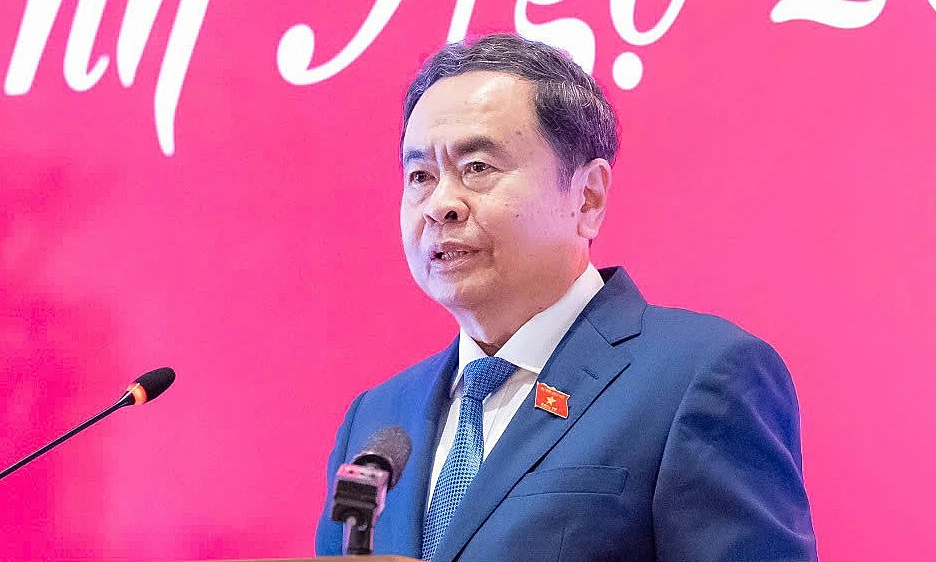
Chairman of the National Assembly Tran Thanh Man announced that the first session of the 16th National Assembly is expected to convene on April 6, 2026, approximately three months earlier than usual.
On the morning of February 23, at a meeting with full-time National Assembly deputies at the central level, along with officials, civil servants, public employees, and staff of the National Assembly agencies and the National Assembly Office, Chairman Tran Thanh Man requested early and thorough preparations to ensure that the first session of the 16th National Assembly is organized in a comprehensive, scientific, and effective manner.
According to regulations, the first session of a newly elected National Assembly must be convened no later than 60 days after the election date. In recent terms, however, first sessions have typically opened in July. For example, the 15th National Assembly convened its first session on July 20, 2021.
Key Agenda of the First Session
At its first session, the National Assembly will focus on consolidating the State apparatus and establishing the operational framework for the entire term.
Specifically, the Assembly will:
- Hear the report on election results and confirm the eligibility of deputies;
- Elect and approve key leadership positions, including the Chairman of the National Assembly, the President of the State, the Prime Minister, the Chief Justice of the Supreme People’s Court, and the Procurator General of the Supreme People’s Procuracy;
- Approve the structure and personnel of the Government as proposed by the Prime Minister.
The National Assembly will also establish and consolidate its own bodies, adopt the legislative agenda, the oversight program, and the session plan for the full five-year term, laying the foundation for legislative and supervisory activities in the years ahead.
Following the first session, the National Assembly will hold two regular sessions each year. The mid-year session will open on May 20, and the year-end session will begin on October 20. If these dates fall on a public holiday or a Friday, the session will start on the next working day.
In addition, extraordinary sessions may be convened at the request of the President, the Standing Committee of the National Assembly, the Prime Minister, or at least one-third of the total number of National Assembly deputies.
Adjustments to the Current Term
In mid-2025, the National Assembly approved a resolution to shorten the term of the 15th National Assembly and the People’s Councils at all levels for the 2021–2026 period.
According to the resolution, elections for deputies to the 16th National Assembly and People’s Councils at all levels for the 2026–2031 term will take place on Sunday, March 15, 2026.
For People’s Councils of the new term, the first session must be convened no later than 45 days after the election date.
Vice Chairwoman of the National Assembly Nguyen Thi Thanh stated that shortening the timeline is necessary to narrow the gap between the National Party Congress in early 2026 and the first sessions of the new-term National Assembly and People’s Councils. This ensures synchronization, continuity, stability, and consistency in assigning new-term members to Party, State, Government, Fatherland Front, and socio-political organizations.
Early consolidation of the State apparatus will also enable Party committees at all levels to promptly implement the resolutions of the 14th National Party Congress and congresses at lower levels.
Key Focus in 2026
At the meeting, Chairman Tran Thanh Man emphasized that the primary task in 2026 is to successfully organize the election of deputies to the 16th National Assembly and the People’s Councils at all levels for the 2026–2031 term.
He noted that in 2025, the 15th National Assembly successfully fulfilled the tasks assigned by the Politburo, the Secretariat, the Party Central Committee, and Party General Secretary To Lam, including the passage of 89 laws.
The Chairman requested the Standing Board of the Party Committee of the National Assembly and the Standing Committee of the National Assembly to develop concrete and practical action programs to promptly bring Party resolutions into practice. He also called on officials and civil servants of the National Assembly to enhance the quality of legislative work, supreme oversight, and decision-making on important national matters.

.jpeg)
.jpeg)